
















Are you searching for hope in the midst of suffering? Can God turn your pain into a powerful story of redemption?
As we journey from Job's personal story of suffering to the epic story of Exodus, we find a constant truth - God is always working, even when we can't see Him.
The book of Exodus begins with the Israelites thriving in Egypt, but soon facing oppression and slavery. Yet, just like in Job's story, God is quietly preparing a magnificent deliverance.
In this episode, Sammy Tippit reveals how God's faithfulness spans generations and how our darkest moments can become the foundation for His greatest works.
After all the noise, the arguments, and the confusion, God finally speaks—and everything changes. In this powerful conclusion to the book of Job, Sammy Tippit explores what happens when the Creator Himself enters the conversation.
Through God’s words to Job, we are reminded of His unmatched wisdom, His sovereign power, and His tender desire to restore His people. From Job’s silence to his forgiveness and ultimate restoration, this episode reveals a timeless truth: when God speaks and we truly listen, transformation follows.
Enjoy the Music and Listen to the message we received from GOD through Pastor Darrell Griffis using Psalm 100 and other passages on this Wednesday Night
The primary application of Daniel 12 is the call to steadfastness and spiritual wisdom in the face of uncertainty. Because God has sovereignly mapped out the conclusion of history, believers are encouraged to remain faithful even when they do not fully understand the "how" or "when" of prophetic fulfillment. The twelfth chapter of the Book of Daniel serves as the grand finale to the visions received by the prophet during the third year of Cyrus, King of Persia. It provides a definitive transition from the historical conflicts of the Seleucid and Ptolemaic empires described in chapter 11 to the ultimate eschatological "time of the end." This section of Scripture is widely regarded by scholars as the most explicit Old Testament reference to the resurrection of the dead and the final distribution of divine justice.
The application of 1 John 1:1–2:2 centers on the concept of "Radical Honesty." In a modern context, this passage encourages individuals to move away from the "performance" of perfection and toward the "practice" of confession.
Authentic Fellowship: True spiritual community is built on walking in the "light." This means being transparent about one's struggles rather than hiding them in "darkness." When individuals are honest about their flaws, the "blood of Jesus" provides a continuous cycle of renewal.
The Habit of Confession: Rather than living in guilt or denial, the believer is encouraged to utilize the "Advocate." Application involves the daily discipline of identifying specific wrongs and bringing them before God, trusting in His "faithfulness" to restore the relationship.
Assurance over Happiness: John distinguishes between fleeting happiness and "full joy." Full joy is found in the certainty of one's standing before God through Christ’s propitiation, regardless of external circumstances or personal failures.
For the modern reader, 3 John 1:14 offers a template for Christian conduct and community. First, it encourages the prioritization of personal interaction over digital or remote communication when dealing with sensitive or deep spiritual matters. Second, it reminds believers to be agents of peace in environments of conflict. Finally, it challenges church leaders and members alike to foster a culture of personal recognition, ensuring that fellowship is not just corporate, but deeply personal and "name-by-name."
Have you ever traveled some where over and over again such as to work, and when you got there you are not sure how, you do not remember making the trip. Sometimes our actions become redundant and we day dream or lose focus and we are on auto-pilot, well the thing is as humans we tend to do a lot of things on auto-pilot such as going to church, and sitting there in that same pew and then the daily things fill our mind and we lost focus on God and the preacher. I know it happens sometimes when I am hungry sitting there and thinking as soon as this sermon is over I am going to eat a delicious hamburger and fries. That is no way to treat God, so what is the answer?
When a New Voice Brings Clarity
When everyone else has spoken and confusion still fills the air, God often raises up a humble voice to prepare the way for His truth. In Job 32–37, a young man named Elihu steps forward—not with pride, but with reverence and conviction.
Sammy Tippit unpacks Elihu’s bold yet humble message: that God speaks through many means, that His justice is always joined with mercy, and that even suffering can serve a redemptive purpose. Through Elihu’s words, we see how humility opens the door for God to move and revival to begin.
When suffering doesn’t end quickly and answers seem far away, faith is truly tested. In Job 15– 31, Job’s friends return with sharper accusations, claiming he must have sinned to deserve such pain. Yet, in the midst of their false judgments, Job holds on to a flicker of hope — “I know that my Redeemer lives.” Sammy Tippit unpacks how Job’s perseverance, honesty with God, and enduring faith reveal what it means to trust when life doesn’t make sense.
Why Job Rejected Their Answers
In Job 4–14, Job's friends attempt to comfort him but end up offering well-meaning yet hurtful advice. Eliphaz, Bildad, and Zophar simplify Job’s suffering into cause-and-effect logic, forgetting compassion and presence.
Sammy Tippit explores how true support in suffering comes from listening, showing empathy, and acknowledging that we don’t have all the answers. Job pushes back, reminding us that life’s trials often defy simple explanations and that God’s wisdom surpasses human understanding.
IF YOU ARE HAVING DIFFICULTY VIEWING/UPLOADING THIS VIDEO, CLICK HERE https://communitychristianchurch.sermon.net https://www.community-christian-church.com https://perrysperiodicals.blogspot.com
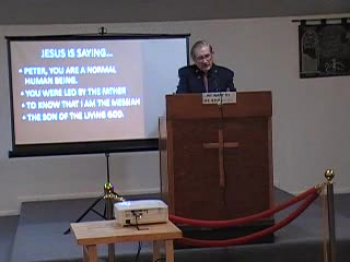
The Church Part 6
"Who Do You Say that I Am?"
Matthew 16:15-16
Job 2:11–3:26 takes us into the raw reality of human suffering. Job has lost everything—his wealth, children, and health—and his friends arrive to comfort him. For seven days, they sit in silence, showing us the power of presence. Then Job speaks, pouring out his grief and anguish in an honest lament that challenges how we understand faith in the midst of pain.
Salem Media, our partners, and affiliates use cookies and similar technologies to enhance your browsing experience, analyze site traffic, personalize site content, and deliver relevant video recommendations. By using this website and continuing to navigate, you consent to our use of such technologies and the sharing of video viewing activity with third-party partners in accordance with the Video Privacy Protection Act and other privacy laws.Privacy Policy


