

‘The Odyssey’: 4 Things Christians Should Know about its Story, Worldview and History
Movies

Audio By Carbonatix
By Michael Foust, Movies
It’s an Ancient Tale about One Man’s Long Journey Home
If you slept through high school literature class – or simply forgot what you read – don’t worry. Here’s a brief summary of the story.
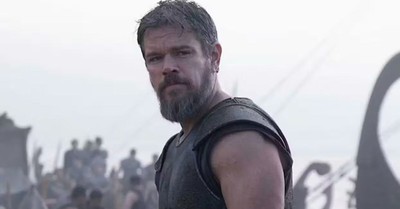
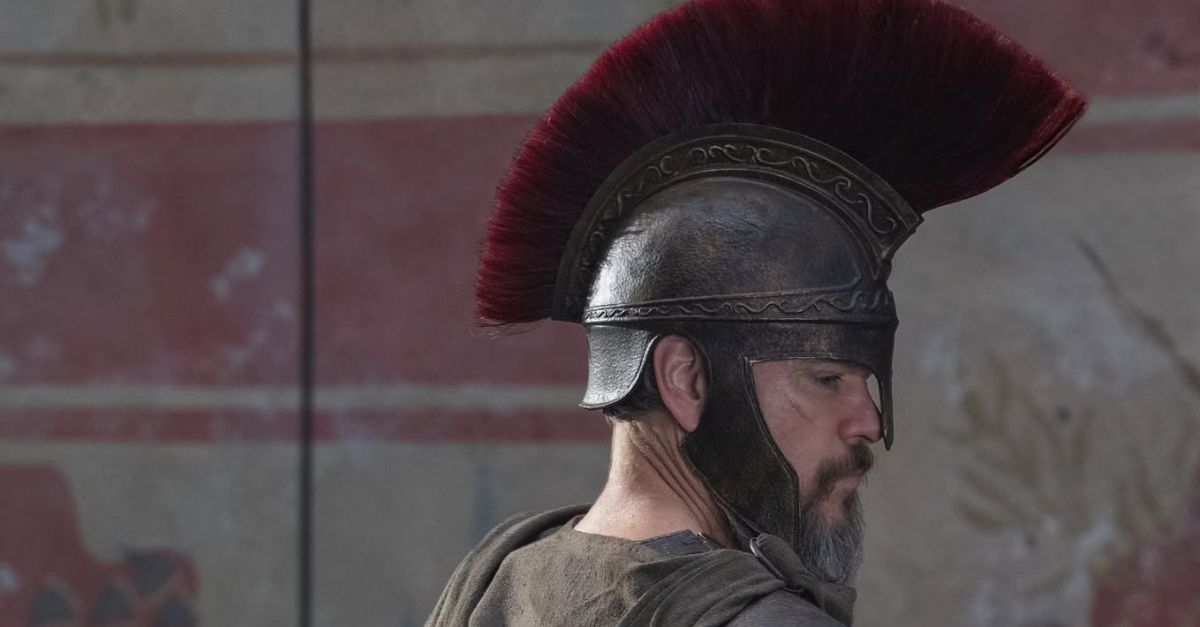
The movie is based on an epic poem, The Odyssey, attributed to the ancient Greek poet Homer and divided into 24 books, according to Britannica. It follows Odysseus, the king of Ithaca, as he struggles to return home after fighting in the Trojan War – a war in which Odysseus was on the victorious side. His journey lasts 10 years, and along the way, he encounters shipwrecks, monsters, temptations, and interference from the gods. Back in Ithaca, his wife, Penelope, is surrounded by suitors who assume Odysseus is dead and want one of them to marry her and claim his kingdom. Their son, Telemachus, meanwhile, leaves home to search for information about the father he has not seen in nearly 20 years.
When Odysseus finally reaches Ithaca, he returns in disguise and is recognized by only a few figures, including his dog. With Telemachus at his side, he confronts Penelope’s suitors and restores his place as king.
It is one of history's most influential literary works. Interestingly, though, historians are not even certain Homer was a real person. Some scholars believe he was an actual poet, while others argue “Homer” may have been the name later attached to a long oral storytelling tradition. Even the dates of his life are uncertain, although many scholars place him around the 700s B.C., while others have proposed earlier dates.
Photo Credit: ©Universal
Its Worldview Contrasts Sharply from Christianity
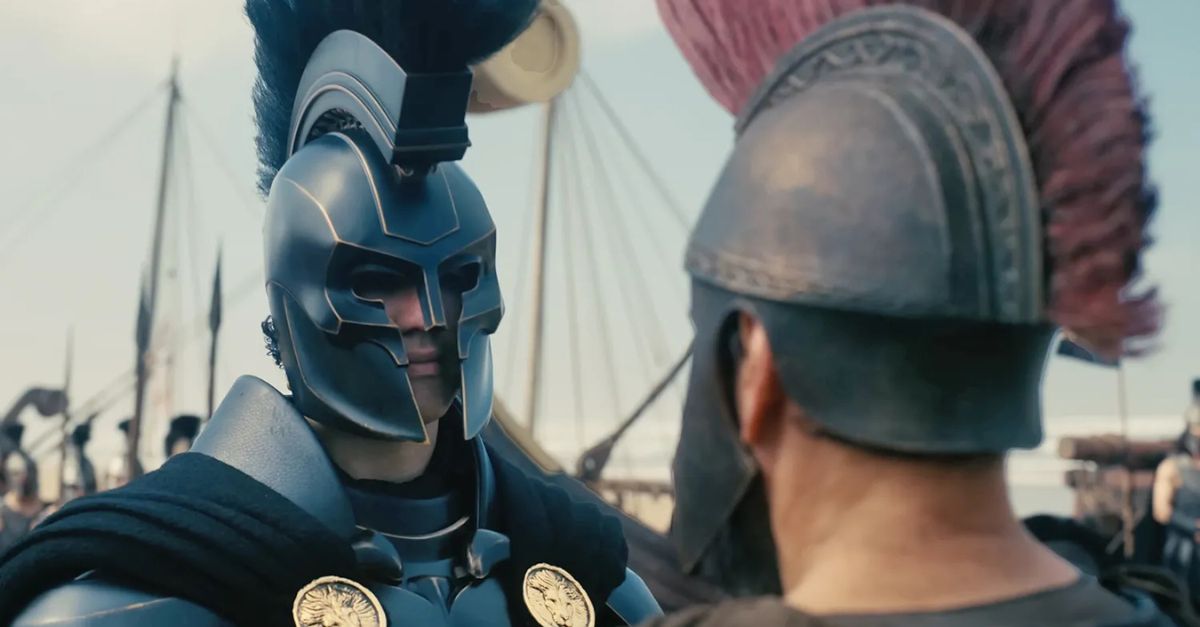
The world of The Odyssey is a polytheistic one, ruled by the Greek gods and goddesses. Athena and Zeus are mentioned prominently throughout the film, and Odysseus and his men offer sacrifices at Athena’s temple, longing for her favor. They repeatedly appeal to the “law of Zeus,” which requires people to show hospitality to strangers and to treat them as if they, too, were gods. (If you've forgotten your Greek mythology, Zeus is the king of the gods, while Athena is his daughter and the goddess of wisdom and war.)
The gods encourage virtues such as hospitality and generosity, but they differ dramatically from the God of the Bible in several key ways. They are portrayed as flawed and unpredictable beings, driven by human-like jealousy, anger, favoritism, and revenge. Rather than reflecting the perfect holiness and unchanging character of Christ, the Greek gods often behave like powerful humans whose decisions are swayed by emotion and personal rivalries.
“Why can't the gods speak in ways we can understand?” Odysseus asks early in the film.
Athena replies that the gods speak through fire, a child’s smile, and a good harvest. (The ancient Greek religion had no single sacred text comparable to the Bible.)
At its heart, though, The Odyssey is a timeless story about one individual’s longing for home and family. Odysseus desperately wants to return to his wife and son, while Penelope remains steadfastly faithful despite years of uncertainty and pressure from other men who believe her husband is dead.
Nolan’s film embraces the full spectacle of Greek mythology, delivering one legendary encounter after another. Odysseus and his men battle the Cyclops, hide inside the Trojan Horse in a flashback sequence, face the enchantress Circe (a witch) – who transforms men into animals – journey to the land of the dead (they call it hell), narrowly escape the deadly whirlpool Charybdis only to confront the six-headed sea monster Scylla, and plug their ears with wax to resist the irresistible song of the Sirens.
It's an epic movie in every sense of the word, reminiscent of classics from yesteryear.
Photo Credit: ©Universal
It’s Rated R for Violence, yet Somewhat Restrained
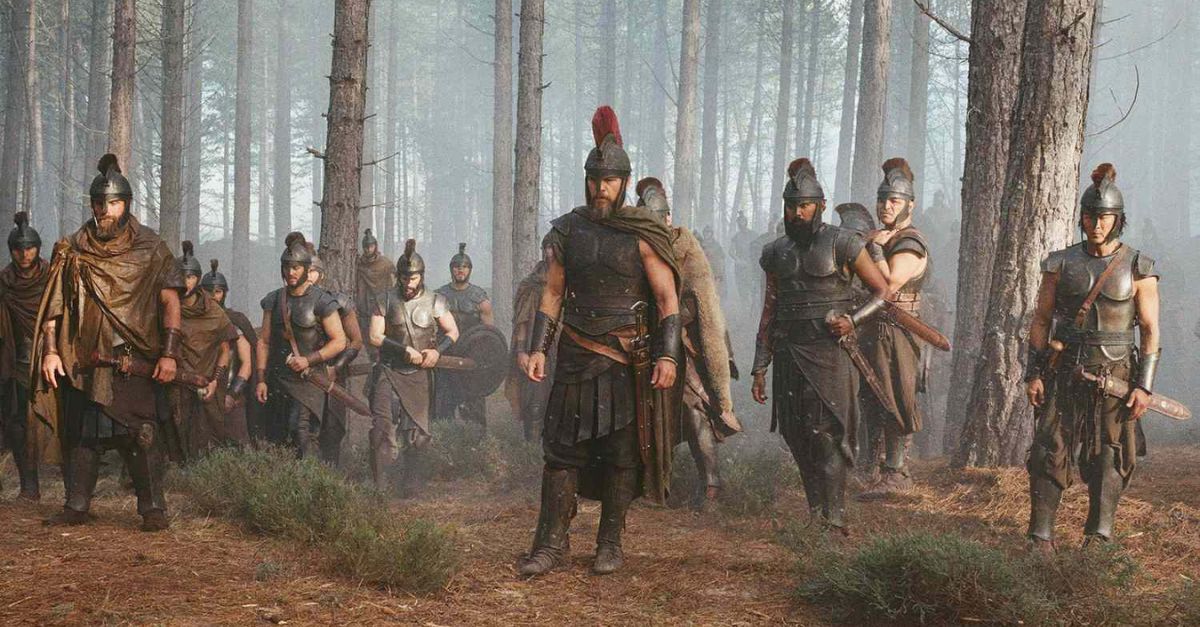
The Odyssey is rated R for “violence and some language,” yet it only occasionally crosses the line from what audiences might expect in a PG-13 film. Nolan, thankfully, shows considerable restraint, refusing to glorify violence in the way many R-rated movies do. (For comparison, Joker was rated R for “strong bloody violence,” while Quentin Tarantino's Django Unchained received an R for “strong graphic violence throughout.”)
Still, the film contains moments that are gruesome and, at times, disturbing. The Cyclops devours a man by biting off his head and arm before Odysseus and his men blind the creature with a massive stake. During a journey to Hades, the dead emerge from the earth and recount their stories, although – families will be glad to know – they are not portrayed as zombie-like creatures. The sack of Troy includes the deaths of countless civilians, including women, though most of that violence occurs off-screen. Throughout the film, soldiers are repeatedly struck by arrows and spears, including graphic hits to the neck. The dialogue contains strong language, including approximately four uses of the f-word, but no sexuality (although we do briefly see a dead man from the backside).
Although The Odyssey may be considered a “soft R,” it never loses sight of the human cost of war. Wives love their husbands, children their fathers. Families and communities are forever changed – all for the lust over land and pointless rivalries. Those themes feel just as relevant today as they did back then.
But Telemachus and his mother refuse to lose hope.
“He never came home,” one character tells Telemachus.
“Not yet,” he replies.
Photo Credit: ©Universal

Its Manuscripts Can Spark an Intriguing Apologetics Discussion
For decades, Christian apologists have used Homer's Iliad and Odyssey as a point of comparison when discussing the manuscript evidence for the New Testament. Their argument is straightforward: If historians accept the text of ancient works such as the Iliad and Odyssey based on the surviving manuscript evidence, then the New Testament – which is preserved in far greater abundance – deserves the same consideration.
Clay Jones, associate professor of Christian apologetics at Biola University, made such a powerful case in a 2025 updated research paper. He noted that Homer's Iliad and Odyssey survive in 1,757 manuscripts – an impressive number by ancient standards, but far fewer than the 5,795 Greek manuscripts of the New Testament. The time gap is also significant: The earliest New Testament manuscript dates to within roughly 40 years of the originals, while the earliest manuscript of Homer’s epic appears about 400 years after they were composed.
The Iliad and Odyssey are “dwarfed” by the New Testament manuscripts, Jones wrote.
Of course, the New Testament presents itself as a record of real people, real places, and real events in history.
“When one adds the fifteen thousand manuscripts in other languages, and then considers that almost the entire NT could be reproduced by the quotations of the early church fathers, one must maintain that, despite the increase of non-NT ancient manuscripts, the NT remains in a class by itself: it is by far the most attested ancient work.”
The Odyssey is rated R for violence and some language. Language details: f-word (4), d–n (2), b––rd (3), s–t (1).
Entertainment rating: 4 out of 5 stars. Family-friendly rating: 2 out of 5 stars.
Photo Credit: ©Universal
