

Texas Power Grid Strain Reveals the Limits of AI Growth
Guest Commentary

Audio By Carbonatix
By Mike Leake, Crosswalk.com

Key Points
- AI and data centers are contributing to rapidly growing electricity demand on the Texas power grid.
- The digital world may feel intangible, but AI depends on physical infrastructure, electricity, land, cooling systems, and human labor.
- Biblical stewardship calls Christians to cultivate what God has given us while also caring for the resources entrusted to us.
- Technological progress should be evaluated by more than what is possible or profitable; Christians should also ask whether it is truly beneficial.
- Because people are made in the image of God, technology should ultimately serve human flourishing rather than requiring people to serve technological systems.
You’ve probably heard the old story about the goose that laid the golden eggs.
Every morning, the farmer discovers another golden egg. That wouldn’t be very tasty for your breakfast, but you could maybe sell that golden egg and just about have enough to get a McDonald’s breakfast sandwich. The ol’ farmer in the story wasn’t satisfied with having to wait for just one egg every day. He reasoned that it’d be better to just kill the goose and unlock the treasure inside. He killed the goose. And with it, his ability to buy McDonald’s.
I might have gotten a few of those details mixed up.
But I thought of this story when thinking through some of the issues with AI and data centers. Actually, I was prompted to think about this when President Trump called server facilities a “golden goose” that local communities need to support.
I get why he said that. Artificial intelligence feels like our latest golden goose. Every few months, we hear some staggering claim about what the future will hold. AI can write software, diagnose diseases, analyze massive amounts of data, translate languages, create images, automate work, and help me figure out what is wrong with the strange noise my refrigerator is making.
His argument is that data centers are powering the artificial intelligence boom. And that, in turn, is attracting massive investment. It’s not like economic growth is something we can afford to bypass. His argument, then, is that if communities become so concerned with costs that they drive data centers away, it’ll end up killing the very thing that produces all the prosperity.
But what if AI and data centers aren’t actually the golden goose?
As I’ve been thinking about what is happening to the Texas power grid, I’m starting to wonder if maybe we’ve identified the wrong goose.
Why Is Texas’ Power Grid Under So Much Pressure?
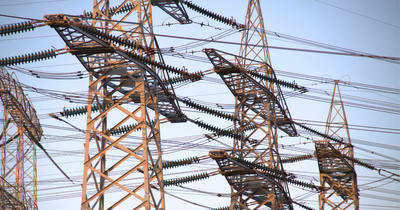
Yes, everything is bigger in Texas. But it can perhaps give us a picture of what might happen across the US. They are now having to reckon with just how much electricity our digital world actually requires.
ERCOT operates most of the Texas electric grid. CEO Pablo Vegas told Texas lawmakers this summer that statewide demand could reach roughly 175,000 megawatts by 2032. I don’t understand what that means. It sounds like Monopoly money unless I have something to attach to it. The problem is scale. Once we start talking in billions, I can’t picture it.
Texas’ 2026 peak electricity demand has already reached roughly 91,000 MW. That’s hard to comprehend too. But here is one way to think about it. If Texas stayed at that peak demand for an hour, the grid would deliver roughly the same amount of energy released by five Hiroshima-sized atomic bombs. That’s insane to me. But even crazier, at 175,000 MW, we’d be talking about the energy equivalent of roughly ten of those atomic bombs every hour.
Data centers are a massive part of that expected increase. Population growth and industrial expansion don’t help the cause either. These are forecasts; things can change. And not every proposed data center will be built. But we’re probably going to be in the ballpark…the very well-lit ballpark.
What all this means is that the “cloud” actually has an address.
When you type a question into your preferred chatbot, you can get a response in seconds. You stream movies in your home and store thousands of pictures online. It all feels like it’s just out there in some floating cloud in the sky. It feels weightless.
But it isn’t.
Somewhere there is a server. And that server is in a building. And that building is generating a crazy amount of electricity. Not to mention the transmission lines, cooling equipment, land, and everything else involved. Including workers and the communities that are part of this whole thing.
The “digital world” is incredibly physical. That’s why I say maybe we’ve got the wrong golden goose. The power grid is the goose.
Without reliable electricity, the AI boom doesn’t get very far. The same is true of your streaming devices, cloud storage, and online banking. We notice all the technology sitting on top of the system. We don’t notice the massive system underneath it.
Until it can’t keep up. Then you’ve got a dead goose.
But maybe we haven’t gone back far enough.
What Does Biblical Stewardship Require of Technology?
When God placed Adam in the garden, he was tasked “to work it and take care of it.” We’re supposed to make stuff. Cultivating is deeply human. We’re to discover what can be done with all the things that God has made. That impulse is what gives us cool technology.
Stewardship isn’t about being suspicious of technology or treating development itself as a problem. Adam was told to work the garden. But he was also told to take care of it. Cultivation and care belong together.
The farmer’s problem wasn’t just that he wanted too many eggs. The bigger issue was that he began viewing the goose entirely in terms of what he could get from it. Once the gold became the main thing, the goose itself became expendable.
Genesis doesn’t give Adam a world to squeeze for maximum output. He has to cultivate and keep it. Those two things limit one another. If the way you produce eventually depletes or disregards the thing we’re supposed to care for, something has gone off the rails.
That truth informs how we respond to things like the Texas power grid. It’s true that AI might create enormous value. And data centers can bring jobs and investment. But those benefits alone don’t settle the question. If getting the next golden egg requires us to treat the grid, resources, communities, or, most importantly, people as little more than fuel for producing it, then we’ve already started getting the order wrong.
Why Does Wisdom Look Beyond the Next Golden Egg?
Proverbs 14:15 says, “The simple believe anything, but the prudent give thought to their steps.” If you’re simple, you’re just noticing the golden eggs. And you might come to the conclusion that you can kill the goose and get gold faster. But the prudent wouldn’t do such a thing. They’ll give thought to their steps.
We have a ton of confidence in AI right now. We’re told that data centers will bring great prosperity. This may be the case. It might ultimately be something that is good for us as a civilization. But Proverbs tell us not only to look at the potential upside but also to consider where all of this might lead.
That means asking whether the promised growth will actually benefit the people being asked to support it. Can infrastructure carry what we are putting onto it? Are we ever going to stop and question our assumption that technological growth is always the same thing as human flourishing?
Is “Can We?” the Right Question About Technology?
When it comes to technology, we seem fixated on whether we can do something and rarely ask whether we should. There was something similar happening in first-century Corinth. No, they weren’t trying to decide whether or not they should build an AI robot that could, in theory, nuke the entire world. Rather, they were trying to decide whether or not their newfound faith in Christ meant they could keep eating in idol temples.
They argued from an “I have the right to do anything” perspective. And Paul acknowledged that, in theory, they could have that kind of freedom. But he raised the bar for them when he said, “but not everything is beneficial” (1 Corinthians 10:23). Something can be possible without it being good. It can even be profitable without being good.
That’s important to think about in terms of technology. If we can build a more powerful AI system, we should. If a data center promises riches, the natural response is to make room for it. But Paul pushes us towards another category: Is it beneficial?
That forces us to look beyond the thing being built and ask what kind of good it actually produces. Does it make us more human or less? Is it truly beneficial? Does it further God’s kingdom or distort it? All of these are valid questions. And if we determine that something is beneficial, we also need to ask who it benefits. That is where the conversation starts moving away from the egg and back toward the goose.
Should Technology Serve People or the Other Way Around?
The point of technological progress can’t simply be that it produces more technological processes. What is this all for? Is it actually serving humanity, or are we becoming enslaved to (and by) technological systems?
Granted, that probably sounds a bit alarmist. But I think it’s important that we get the “goose” right on these questions.
Keep tracing the eggs backward. AI depends upon data centers. Data centers depend on the grid. And the grid depends on the people who built it and the communities that live with it. Eventually, you get back to people. We’re the ones paying the electric bills and needing reliable power in sweltering Texas heat.
People are the goose.
But even that’s not entirely accurate. In the story, the goose matters because of what it can produce. The Bible says that people matter for a different reason. We’re made in the image of God. And that changes everything.
Technology has to serve people, not the other way around. And if economic growth isn’t in the long run helping people to actually flourish as God intended, then it’s not a net gain. If we become fascinated with all that AI can produce but the people underneath the system are crushed, then we’ve made the same mistake as the farmer. But only we’ve done it to ourselves.
I do understand the danger of killing the golden goose. I just think it’s important that we make sure we’ve identified the right one.
Frequently Asked Questions
Why are data centers putting pressure on the Texas power grid?
Data centers require large amounts of electricity to operate servers, cooling systems, and other infrastructure. Texas is also experiencing population growth and industrial expansion, adding to future electricity demand.
What does AI have to do with electricity demand?
AI systems run on physical servers housed in data centers. Training and operating increasingly powerful AI models requires electricity, meaning the seemingly weightless digital world depends on substantial physical infrastructure.
What does the Bible teach about stewardship and technology?
Genesis presents humanity as both cultivators and caretakers of God's creation. Christians can embrace innovation while also considering whether resources, communities, and people are being cared for wisely.
Is technological progress always good?
No. First Corinthians 10:23 reminds Christians that something can be permissible without being beneficial. Technology should therefore be evaluated not only by what can be built but by the good it actually produces.
How should Christians think about AI and human flourishing?
Because human beings are made in God's image, technology should remain a tool that serves people rather than becoming an end in itself. Innovation should be measured partly by whether it contributes to genuine human flourishing.
For Further Reading
- What Communities Should Know Before Saying Yes to Data Centers
- How Christians Should Think about AI, Efficiency, and Wisdom
- What Is the Church’s Responsibility in Creation Care?
- What Are Stewards in the Bible? Meaning and Importance of Stewardship
- Who’s Really Behind the Power of AI?
Photo Credit: Frankenvrij from Getty Images Pro
